
1
Raw Materials
Incoming cocoa beans are weighed, inspected, and staged for processing. Humidity sensors and scales publish receiving metrics.
9 machines — cocoa bean silos, cocoa butter tanks, sugar and milk powder silos
A virtual chocolate factory built to show — not explain — what connected manufacturing looks like. Every machine, order, and metric here is live.
Everyone understands the journey from cocoa bean to wrapped bar. That makes chocolate the clearest possible stage for industrial data infrastructure — no domain expertise required. Every area runs the same open architecture we deploy in real PREKIT factories.
Follow a production order from raw beans to dispatch. Ten headless PREKIT area nodes read the machines over Modbus TCP, S7, and OPC UA — every signal lands as a typed MQTT metric in one shared namespace.
Incoming cocoa beans are weighed, inspected, and staged for processing. Humidity sensors and scales publish receiving metrics.
Drum roasters bring beans to profile temperature. Exhaust, drum speed, and motor current are tracked per batch.
Nibs are ground into cocoa liquor. Conching refines texture and flavour over hours. Particle size and viscosity are the key metrics.
Tempered chocolate is deposited into moulds and passed through cooling tunnels. Temperature curves and vibration data govern quality.
Samples are pulled from each batch for weight, texture, and visual inspection. Reject counts feed back into the production order.
Finished bars are wrapped, cartoned, and palletised. Packaging line speed and label accuracy are monitored in real time.
Chillers, compressors, and HVAC units keep the factory within operating parameters. These machines feed the namespace but don't belong to a production step.
Ten headless PREKIT area nodes connect the machines to the shared factory namespace. The hub runs Colca as its open-source data layer and aggregates context from all nodes; dataops derives machine state and OEE from the same stream.

Same stack we deploy for real manufacturing customers. No shortcuts, no demo-only scaffolding.

Orders, recipes, and work-centre sequences travel through one inspectable operational fabric instead of fragmenting across tools.
Learn Morenorth_east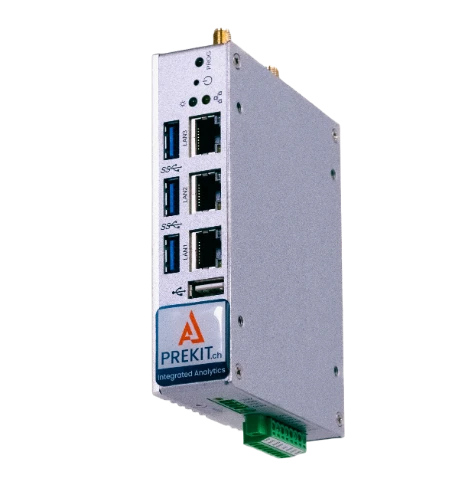
On-prem deployment, source code ownership, and private-model readiness are operating constraints, not optional extras.
This factory is open by design. If you build industrial software and want to integrate your own solution to show real customer value in an interactive Industry 4.0 environment, reach out. No pitch decks, just working solutions.
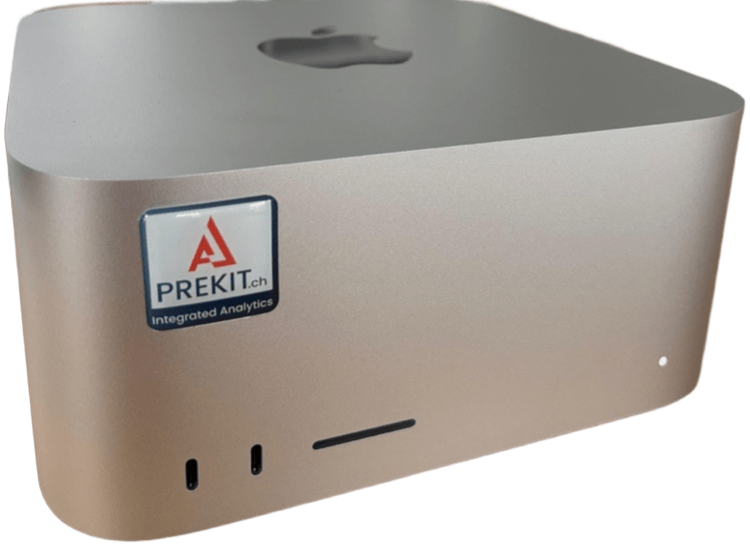
Send us a messagearrow_forwardThe assistant runs as a bounded two-stage loop: private model decides which read-only factory commands to execute, then private model turns that evidence into the final answer. Both models run locally on our in-office Mac Studio via Ollama — no cloud dependency.
Data is cleaned and contextualised at the source. The cloud stays optional.
Execution data is contextualized with work orders, recipes, work centres, and downstream status so the shop floor stays legible from ERP to dispatch.
MQTT, OPC-UA, REST, and readable contracts keep the system inspectable and portable.
Alpamayo designed and built everything behind this factory — PREKIT, the ERP bridge, the open interfaces, and the architecture that keeps production context intact from order to dispatch.
